Planning a Day Trip to Kintamani and Mount Batur from Ubud
In the quiet early hours before Ubud awakens, the air carries a distinct stillness. Leaving the cultural heart of Bali for the high caldera of Kintamani is a journey of transitions. You move from humid lowland forests and art galleries up winding asphalt ribbons toward the chilly volcanic ridgelines that my family has called home for generations. The distance is roughly forty kilometres north, yet the shift in elevation, temperature, and landscape is dramatic. Deciding whether to do a Mount Batur stay or day trip comes down to your pace, but starting from Ubud allows you to experience this dramatic transformation in a single, well-timed day lah.
Early Morning Departure: Setting the Alarm for a Pre-Dawn Journey
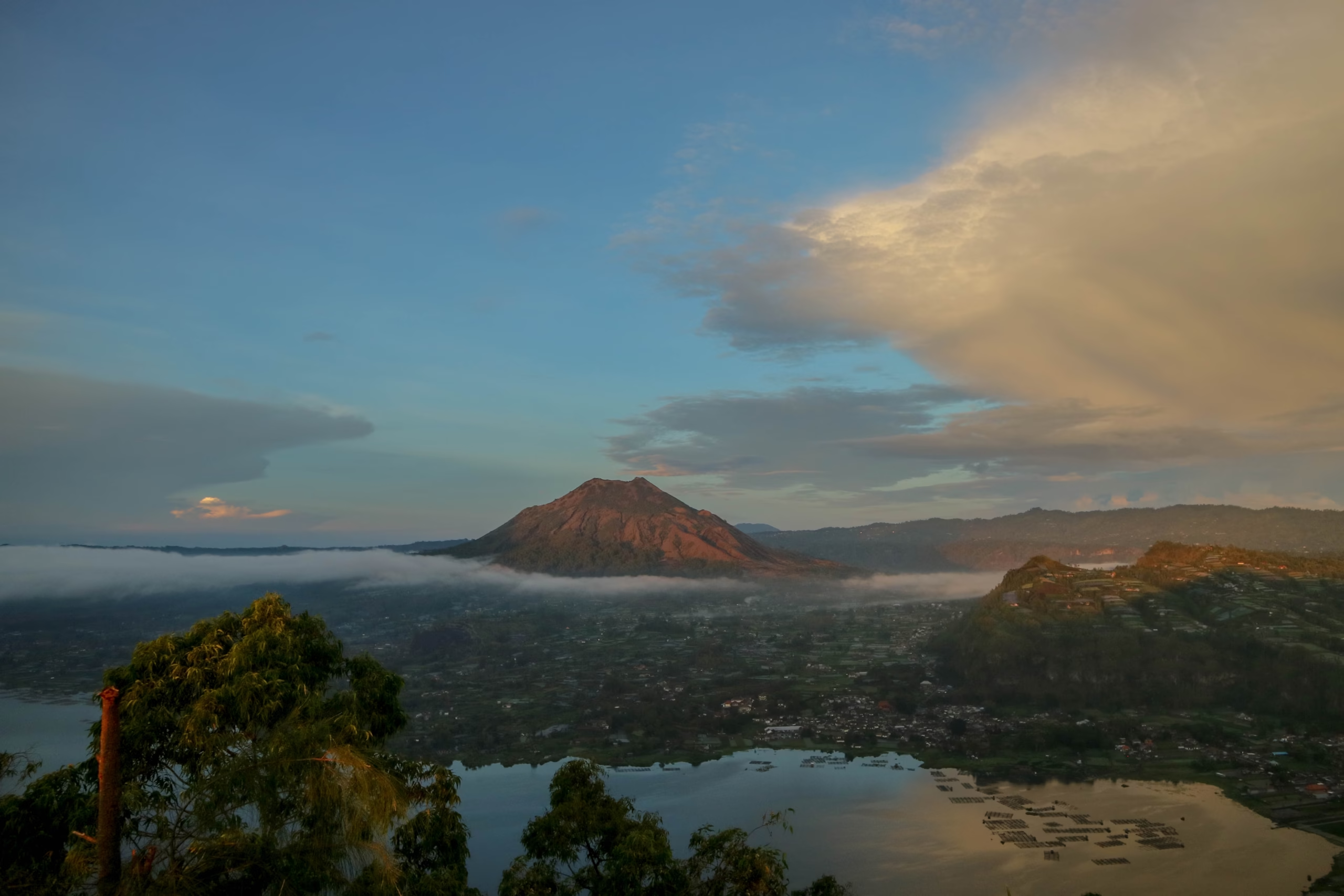
To reach the crater rim before the sun breaks over the horizon, timing is everything. A standard trip to Mount Batur for sunrise requires an alarm set between 2:00 AM and 2:30 AM if you start from central Ubud. The drive takes about an hour to seventy minutes when the roads are empty, bringing you to the trailhead around 3:30 AM.
Starting this early might seem taxing, but it mimics the patience we use in coffee farming. You must move before the sun heats the earth. Drivers who collect guests from Ubud hotels navigate dark, narrow backroads where streetlights disappear. Leaving late means stuck behind slow agricultural trucks climbing the steep grade into Kintamani, which can delay your hike and cost you the light.
Choosing Your Wheels: Motorbikes, Drivers, and Shuttles
Selecting transport for a Mount Batur day trip depends on your confidence on sharp curves and cold night winds. Renting a scooter costs around 80,000 to 150,000 IDR per day, giving you independence [1.1.9]. However, riding up mountain highways at 3:00 AM requires warm layers, full-face helmets, and vigilance against unlit patches on the road surface. Fog often rolls into the higher elevations around Penelokan, reducing visibility to a few metres.
Hiring a private driver costs between 600,000 and 900,000 IDR for a full ten-hour day. This option allows you to rest during the pre-dawn transfer and provides secure storage for extra clothes, camera gear, and dry shoes while you explore. Group shuttles organized through local tour desks are economical for solo travelers, but they follow fixed schedules that limit impromptu stops at roadside coffee farms or local warungs. Check our detailed transportation breakdown for complete route maps and driver contact guidelines.
| Transport Mode | Estimated Cost (IDR) | Pros | Cons |
|---|---|---|---|
| Scooter / Motorbike | 80,000 – 150,000 / day | Complete flexibility, lower cost | Cold night air, hazardous mountain fog |
| Private Driver | 600,000 – 900,000 / day | Comfortable, safe, custom itinerary | Higher expense for single travellers |
| Group Shuttle | 150,000 – 250,000 / person | Budget friendly for solo trips | Fixed timing, shared space with strangers |
Reaching the Summit: Sunrise Trekking versus 4×4 Jeep Adventures
Once you arrive in Songan or Toya Bungkah at the base of the volcano, two main paths lead up the slope. The classic foot trek requires roughly two hours of steady climbing up loose volcanic ash and basalt rock. The trail reaches an elevation of 1,717 metres above sea level. It is accessible for beginners with average fitness, though the steep final incline demands reliable footing. Local guides are mandatory under official safety regulations enforced by the local guide association, ensuring visitors stay on marked paths away from active steam vents.
For those who prefer to avoid the dark foot climb, four-wheel-drive volcanic jeep tours offer an alternative route up the black lava fields on the western flank. Prices for jeep expeditions generally range from 600,000 to 900,000 IDR per vehicle. While jeeps do not drive to the precise hiking summit peak to preserve the sacred soil, they park at elevated viewpoint terraces across the black sand fields. You can compare both physical requirements and viewing angles in our trekking vs jeep tour comparison before securing space on our tickets hub.
“The mountain does not care about your speed. Like the coffee trees on our family terraces, you step upward with steady breath, trusting teh path beneath your boots.”
— Wayan Oka, Kintamani Native
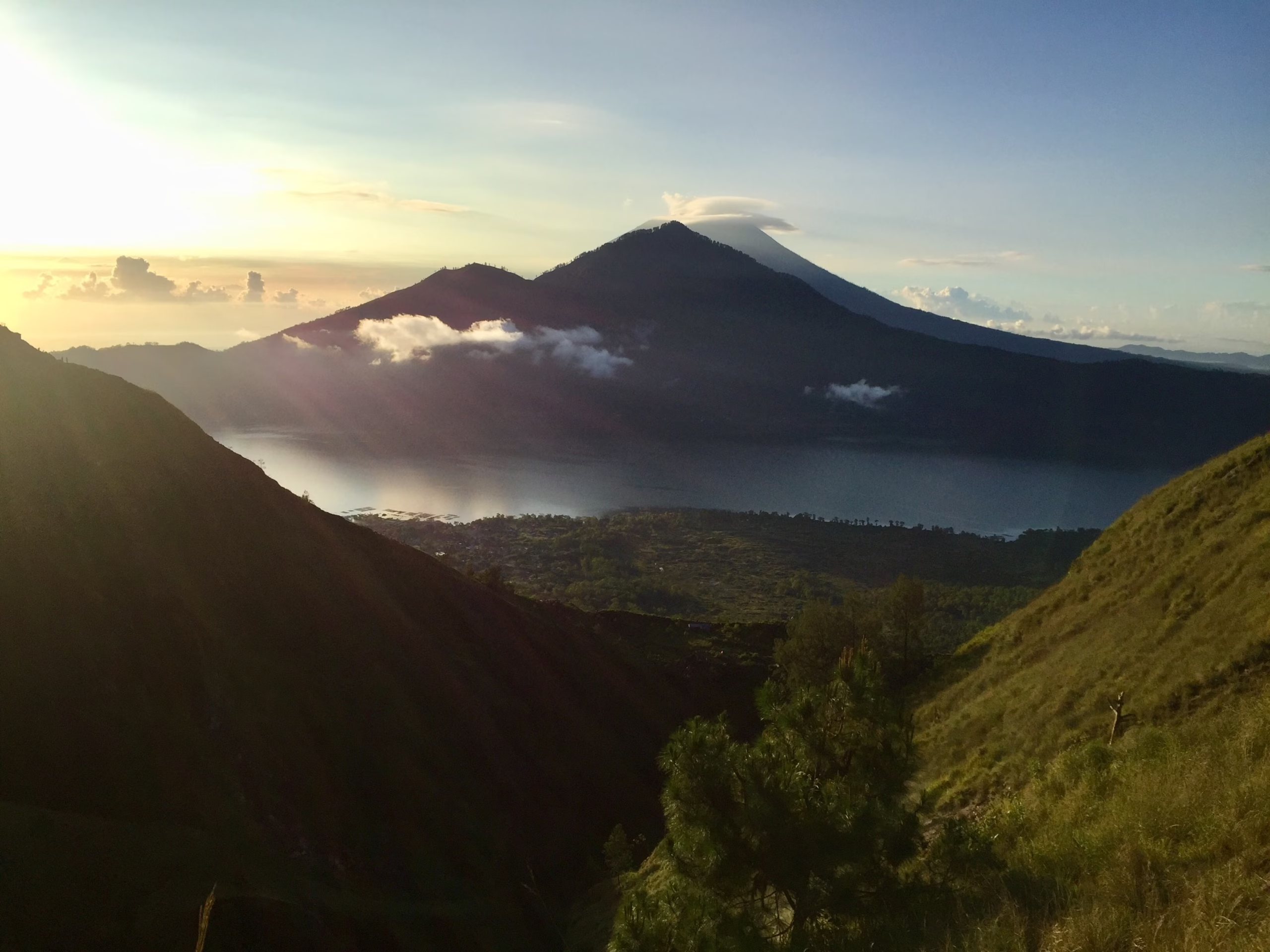
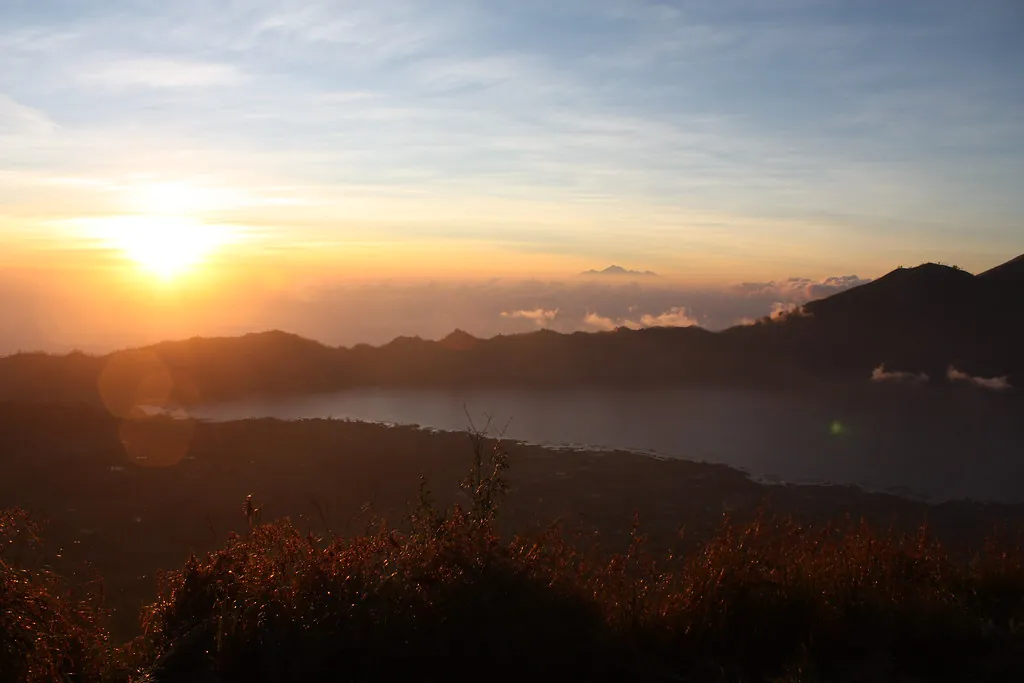
Whether you hike or take a jeep, you will experience the caldera rim coming to life as light spreads across Lake Batur. Active steam vents warm the cold morning air, and guides often boil eggs in volcanic steam crevices for breakfast at the summit huts.
Beyond the Rim: Mende Hill and Cinematic Highland Landscapes
After the sunrise crowds disperse from Mount Batur, many travelers head straight back to Ubud, missing the surrounding highlands. A short drive across the ridge leads toward Mende Hill, a natural ridge system rated 4.9 by travelers for its dramatic steep peaks and deep green valleys. The rolling terrain offers expansive views across rural Bangli, with sharp ridgelines that look strikingly similar to landscapes seen in fantasy films like Avatar.
Reaching Mende Hill involves walking narrow paths across high agricultural terraces where local farmers grow cabbage, onions, and chili peppers in rich dark soil. The wind along these ridgelines is fresh and cool, offering quiet solitude away from major commercial stops.
Coffee Culture in the Crater: Tasting Kintamani Arabica at the Source
Kintamani produces some of Indonesia’s finest Arabica coffee beans, grown in rich volcanic soil between 1,000 and 1,500 metres above sea level. The unique microclimate gives Kintamani coffee a distinctive citrus acidity and light body. Visiting a real family-run farm allows you to see the pulping, sun-drying, and hand-roasting processes without high-pressure souvenir sales.
Unlike commercial tourist tasting gardens along the main highway, traditional farms focus on organic cultivation underneath shade trees like orange and banana palms. Sit down with a farm family for a cup of freshly brewed Bali Kopi, brewed directly in boiling water without filters. The aroma tells the entire story of this volcanic soil, which my father always said was the true gift of Batur.
Real Kintamani Arabica tastes of citrus blossoms and mountain air, carrying the mineral heritage of volcanic eruptions that shaped these hills centuries ago.
Cultural Stops on the Descent: Penglipuran Village and Ancient Heritage
Heading south from Kintamani toward Ubud, the road descends through Bangli Regency. A rewarding stop along this route is Penglipuran Village, rated 4.8 by global travelers and recognised globally for its exceptional cleanliness and community preservation efforts. The village layout follows traditional Balinese spatial architecture, arranged linearly along an uphill stone street lined with identical brick gates and manicured gardens.
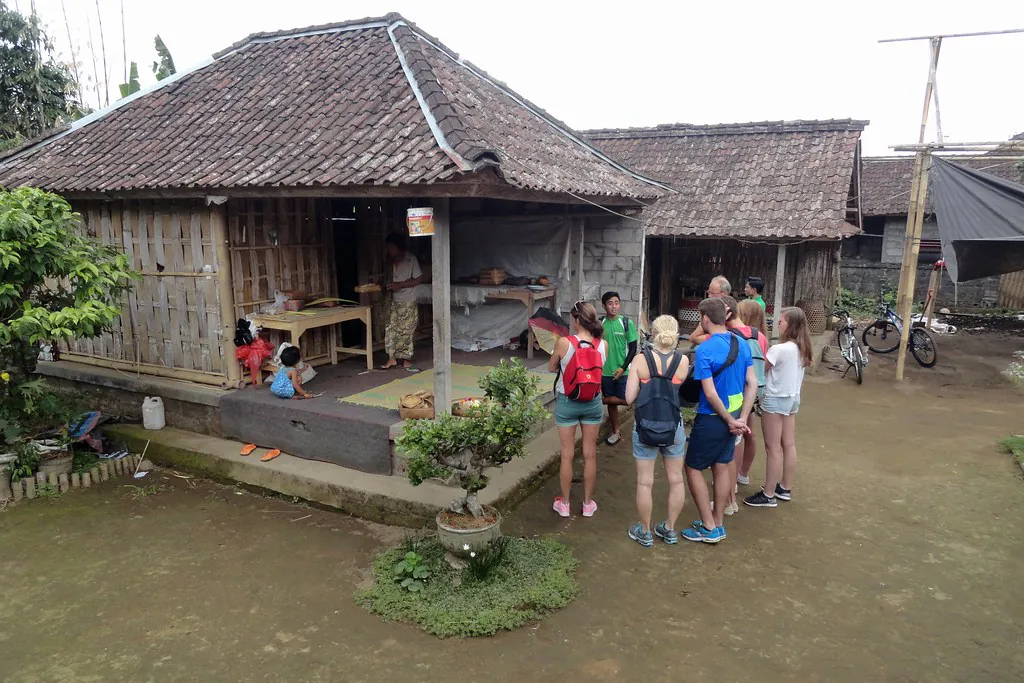
Motor vehicles are strictly banned inside the village core. Visitors can walk along immaculate brick paths, interact with locals weaving bamboo crafts, and explore the dense, protected bamboo forest at the northern border. Buying a glass of fresh loloh cemcem—a traditional green herbal drink made from local leaves—supports local village families directly.
Temples and Puppets: Pura Maospahit and Setia Darma
Further down the southern slope toward Ubud, cultural heritage sites reveal the island’s historical roots. Pura Maospahit is an ancient 14th-century temple complex built with distinct red-brick architecture and terracotta reliefs that survived centuries of seismic activity. The construction style reflects the influence of the Majapahit Empire, standing in contrast to modern stone temple carvings seen elsewhere in central Bali.
Near the southern approach in Sukawati, the Setia Darma Foundation maintains the Setia Darma House of Mask and Puppets. This cultural sanctuary houses thousands of traditional masks and performance puppets gathered from across Indonesia and Southeast Asia. Displayed inside several reassembled antique wooden joglo houses, the collection offers context on how Balinese spiritual drama connects with mountain worship and ancestral storytelling.
Chasing Mountain Waters: Side Trip to Banyumala Twin Waterfalls
If you choose an extended day trip route across the northern plateau rim, a detour toward the Buleleng region leads to Banyumala Twin Waterfalls. Rated 4.8 by visitors, this natural site features two parallel water curtains cascading down a rock face covered in lush moss into a natural swimming basin.
The clear, cold water originates from high mountain springs, offering a cool swim to wash away volcanic dust from morning trekking. The trail down requires a fifteen-minute walk along stepped bamboo ladders and earthen steps. It stays lush and cool even during midday sun, making it a great place to rest before returning to Ubud.
Thermal Recovery: Geothermal Hot Springs at Toya Bungkah
At the base of Mount Batur along the shore of Lake Batur lies Toya Bungkah, a village famous for its natural geothermal water. Rainwater seeps deep into the volcanic ground, warms against underground magma chambers, and rises to the surface rich in mineral compounds at temperatures around 38°C to 40°C.
Soaking in these thermal pools after a morning hike eases muscle stiffness and leg fatigue. You can sit along the edge of tiled pools looking directly across the calm lake surface toward Mount Abang. Read our complete hot springs guide to learn about locker rentals, towel services, and towel entry packages at local bathing sites.
Midday Dining with a View: Warungs Along the Crater Edge
By lunchtime, Penelokan rim road offers panoramic views across the entire caldera floor, including Mount Batur’s inner cone and Lake Batur. Rather than stopping at expensive tourist buffet centers, look for family-run local warungs tucked away along the lower ridgeline roads.
Try regional dishes like Mujair Nyat-Nyat, a freshwater tilapia fish caught daily in Lake Batur, seasoned with rich yellow basa genep spice paste, lemongrass, and chili. Served alongside steamed white rice, wild ferns, and roasted peanuts, this meal offers an authentic taste of local mountain cooking. Official regional tourism details are available through the Indonesia Tourism Official Portal, highlighting sustainable local dining choices in Bangli Regency.
Essential Preparation, Weather, and Safety Rules
Highland weather changes quickly. Morning summit temperatures can dip down to 10°C to 14°C, accompanied by strong winds before the sun climbs. Dressing in removable layers is essential; a moisture-wicking shirt, warm fleece jacket, and lightweight windbreaker keep you comfortable throughout the morning transition.
Sturdy athletic shoes or proper hiking boots with grippy soles are necessary to maintain footing on slippery volcanic gravel during steep descents. Altitude sickness is extremely rare on Mount Batur given its modest 1,717-metre summit height, but staying hydrated is crucial. Review our complete packing and attire guide and official safety policies on our visitor guidelines page prior to traveing.
Returning to Ubud: Timing the Afternoon Traffic
Heading back to Ubud in the afternoon requires strategic timing. The main arterial road connecting Kintamani, Bangli, and Pujung experiences heavy traffic between 3:30 PM and 6:00 PM, as delivery trucks and returning tour vehicles funnel down narrow mountain passes. Leaving Kintamani by 1:30 PM or 2:00 PM allows you to reach Ubud within seventy minutes, leaving time to relax before evening.
If you are traveling with a private driver, many day-trippers combine the scenic descent back into Ubud with an afternoon stop at the dramatic Tegallalang rice terraces; explore the comprehensive Bali rice terraces visitor guide to plan your walking route during the late afternoon golden hour.
If you prefer a slower pace, extend your afternoon with a stop at a quiet roadside coffee spot along the ridge or explore our comprehensive planning and timing guide to structure your schedule. Check regional weather conditions on the BMKG Weather Portal and geological designations via the UNESCO Geopark Network to ensure safe travel conditions. Mount Batur and its surrounding highlands offer unforgettable memories when treated with patience and real respect lah.